
/ News, Berichte
The Future of Viticulture in the Upper Rhine Region: Innovation meets sustainability 🍇
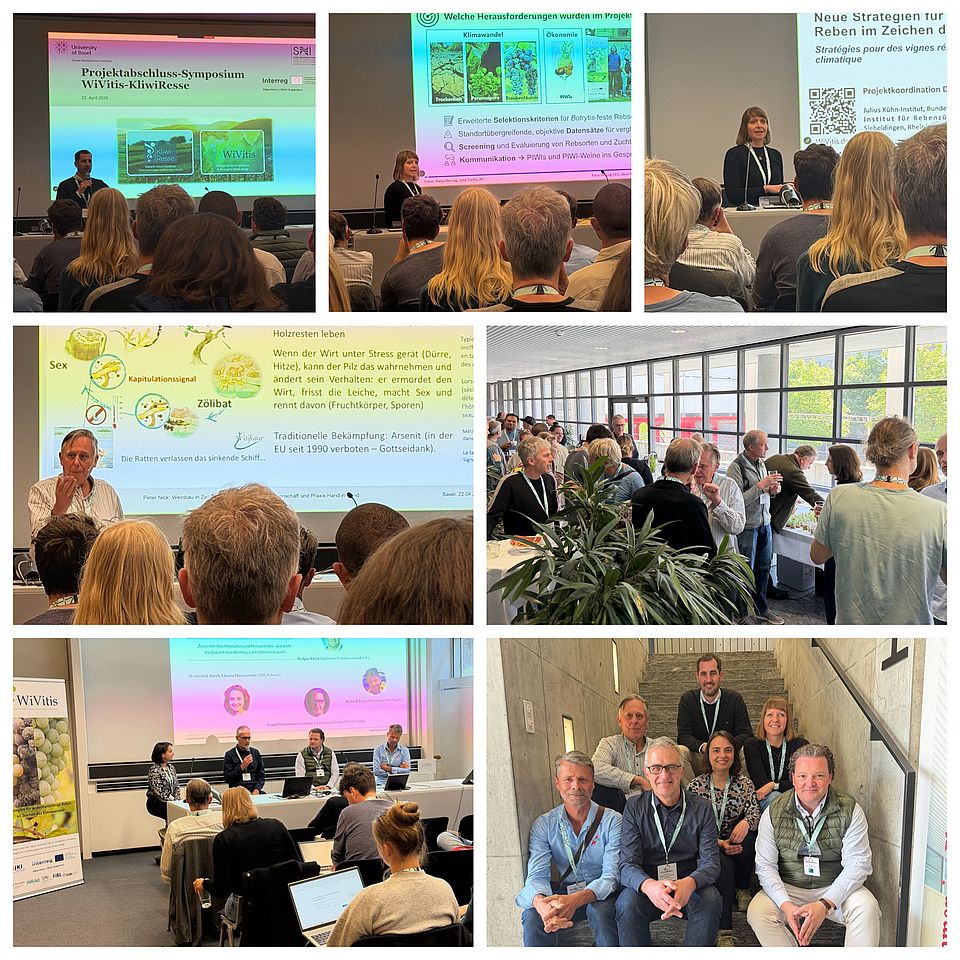
The main focus of the closing meeting of the trinational WiVitis and KliwiReSSE projects at the University of Basel was how viticulture can address the challenges of climate change — while remaining sustainable and economically successful.
Project results clearly show the central role played by fungus-resistant grape varieties (PIWIs). They are often superior to traditional varieties in terms of climate resilience and disease susceptibility — as was shown using different innovative analytical methods — from 3D scans to cryo-SEM examinations — that provide new insights into grape resilience.
Genetic approaches also offer prospectives for breeding climate-resistant varieties specifically using wild grapevine genomes and new stress markers. Soil, an often overlooked factor, is equally gaining more attention. High microbial diversity in soil can significantly strengthen the resilience of vines.
Practical examples show that sustainable viticulture is already working today — for instance, through biodiverse cultivation systems, careful soil management and avoiding pesticides. What remains clear, however, is that change takes time, education and acceptance.
🍷 Verdict following a wine tasting: PIWI wines are impressive — not only in terms of sustainability and long-term viability but also in taste.
A more detailed report will be published in the next issue of SNI INSight.
Further information:
WiVitis
KliwiReSSE
Nano Imaging Lab, Universität Basel